Training & Education
Advancing the use of virtual control groups (VCGs) in toxicology requires not only scientific and methodological developments, but also a shared understanding of their principles, potential applications and requirements for their use.
Through its educational and training activities, VICT3R aims to help researchers and toxicologists understand how VCGs could be applied in their own studies, while making the approach accessible to anyone interested in learning more.
Explore our educational resources through two complementary formats:


Learn about Virtual Control Groups
Virtual control groups (VCGs) have the potential to reduce animal use in toxicology studies. But applying them in practice requires an understanding of how they are generated, when they can be used and what scientific requirements need to be met.
Education and end-user training are therefore an important part of VICT3R’s activities. Our aim is to help researchers and toxicologists understand how VCGs could be applied in their own studies, while making the concept accessible to anyone interested in learning more.
To support this, we have developed a series of short educational videos covering the principles of VCGs, their practical application and the work being carried out within VICT3R.
Introduction to the VCG Concept
This first video introduces the basic principles of VCGs, explaining how suitable historical control data are identified, filtered and matched to generate virtual control groups. It also explores their potential benefits and the key considerations for determining when VCGs can be appropriately applied.

VICT3R: Virtually Speaking Webinars Series
Launched in January 2025, the VICT3R: Virtually Speaking webinar series brings together experts from different sectors and disciplines to explore VCGs and related topics, share knowledge and encourage scientific discussion.
The series has featured two seasons, both open to a wide audience. Explore the topics, speakers and webinar recordings from both seasons below.
 |
 |
 |
|---|
 |
 |
 |
|---|
 |
 |
 |
|---|
 |
 |
|
|---|
 |
 |
 |
|---|---|---|
 |
 |
|
VICT3R: Virtually Speaking Webinars Series (Season 2)
Running from September 2025 through Spring 2026, Season 2 of the Virtually Speaking webinar series expands the focus beyond VICT3R to explore cross-cutting themes in toxicology, safety science, and data sharing and reuse. All sessions are open to the public and feature external experts from leading initiatives and scientific fields, bringing diverse perspectives to the discussion. Below you can explore the full list of sessions and watch the recordings!
Satomi Nishikawa
Chief Research Scientist at Tanabe Pharma
Satomi Nishikawa presents the results of a questionnaire survey conducted among pathologists, based on her work within JPMA, focusing on pathological evaluation in studies implementing VCGs.
Drawing from these findings, she discusses key challenges and concerns related to pathological evaluation in VCG-implemented toxicity studies, offering valuable insights into how VCGs can be applied in practice and where further discussion is needed.
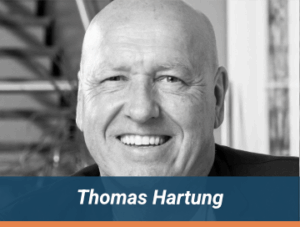
Thomas Hartung
Professor Johns Hopkins Univesity and University of Konstanz
In collaboration with ASPIS cluster
Validation remains one of the main bottlenecks for the broader adoption of New Approach Methods (NAMs). In this webinar, Thomas Hartung will explore how AI can help rethink and accelerate validation, moving beyond traditional, time-consuming approaches.
The session introduces the concept of e-validation, combining data-driven methods, computational modelling, and mechanistic understanding to streamline validation while maintaining scientific rigor. It will also address key challenges such as data quality, model transparency, and building trust in AI-based approaches.
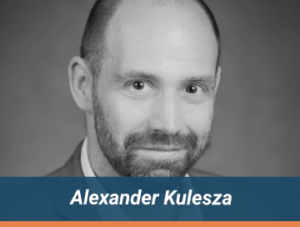
Alexander Kulesza
Principal Scientist | Lead QSP/T and qAOP
ESQlabs GmbH
The CRACK-IT Challenge 40: Virtual Second Species aims to develop a “virtual dog” to reduce reliance on animal testing. To this end, the Virtual Second Species Suite (VSS Suite) is being created based on computational mechanistic toxicology, combining data-driven models with mechanistic knowledge of toxicity pathways.
In the webinar, Alexander Kulesza presents the system architecture, current implementation status, and future applications. This “middle-out” approach is expected to improve prediction of chronic and idiosyncratic toxicities, reduce the need for long-term non-clinical safety (or toxicology) studies in dogs, and ultimately contribute to refining, reducing, and replacing animal testing.
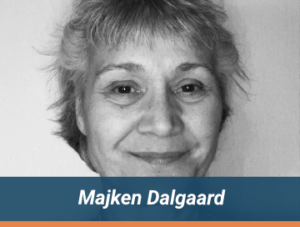
Majken Dalgaard
Senior Principal Toxicologist, Department of Safety Pharmacology and Early Toxicology at Novo Nordisk
Project Lead of NHPig project
NHPig Project, funded by the Innovative Health Initiative (IHI), is working to advance the use of mini- and micropig models as scientifically robust alternatives to non-human primates (NHPs) in non-clinical safety testing. By expanding the biological knowledge base of pig models and strengthening their translational relevance, the project supports progress in the 3Rs (Replacement, Reduction and Refinement) by developing viable alternatives to NHP use.
While VICT3R focuses on Reducing animal use through data-driven Virtual Control Groups (VCGs), NHPig advances the field through Refined model development. This webinar highlights the strong and growing collaboration between the two initiatives, united in promoting more ethical and effective approaches to safety assessment.
Damien Huzard, PhD
Founder and CEO of Metadatapp (MAPP) and Lead Scientist at NeuroNautix
This webinar discusses how standardising metadata, identifiers, and experimental context can transform isolated experiments into reusable research assets. It reviews the current landscape of reporting guidelines, metadata checklists, and emerging minimal information standards, addressing both their strengths and practical limitations − particularly the gap between descriptive reporting and true machine-actionable standardisation.
Simón Perera del Rosario
Business Development Manager at ProtoQSAR
This webinar explores the current landscape of NAMs for assessing safety and efficacy without the use of animal testing. It highlights the scientific, ethical, economic, and regulatory drivers behind this paradigm shift, as well as the key challenges of coverage, validation, and regulatory acceptance. The focus is placed on in silico NAMs − such as read-across, molecular modelling, and QSAR models − and their integration with IVIVE, IATA, and AOP frameworks to generate human-relevant mechanistic evidence.
Dr. Tatyana Doktorova, ERT
Principal Scientist – Computational Toxicology, Predictive Modelling, Roche Pharma Research and Early Development, F. Hoffmann-La Roche Ltd
In this session we explore how Roche, as part of the VICT3R project, is advancing the use of Virtual Control Groups (VCGs) to transform toxicology research. The session highlights the challenge of building reliable VCGs from decades of legacy animal study data, where essential metadata − such as vehicle, diet, and test facility − has often been missing or unstructured.
Dr. Thomas Steger-Hartmann
Senior Project Lead IHI, Bayer AG, VICT3R Project Lead
Part 3 of our 3-part mini-series on “Overcoming Societal, Cultural, and Regulatory Barriers to Virtual Control Group Adoption” organised in collaboration with Humane World for Animals.
This final session discusses the regulatory and institutional barriers faced during the implementation of virtual control groups by industry and CROs and the approaches to overcome these challenges.
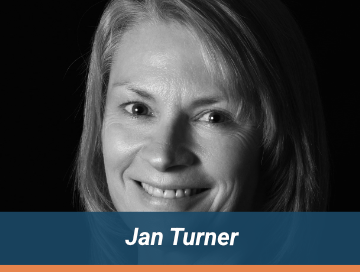
Jan Turner
Principal, Medicines (Humane World for Animals)
Part 2 of our 3-part mini-series on “Overcoming Societal, Cultural, and Regulatory Barriers to Virtual Control Group Adoption” organised in collaboration with Humane World for Animals.
This webinar showcases how stakeholder collaboration and harmonisation have already transformed regulatory practice in vaccine testing. These successful case studies provide a model for how innovation can overcome barriers in safety testing and pave the way for Virtual Control Group adoption.
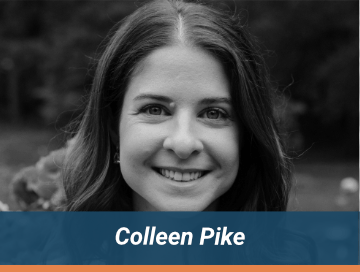
Colleen Pike
Senior Program Director, Regulatory Science (Humane World for Animals)
Part I of our 3-part mini-series on “Overcoming Societal, Cultural, and Regulatory Barriers to Virtual Control Group Adoption” organised in collaboration with Humane World for Animals.
What really holds back the adoption of new approach methodologies in nonclinical safety testing? This session explores why scientific progress alone isn’t enough – and how shifts in mindsets, institutions, and collaboration are essential to move forward.
VICT3R: Virtually Speaking Webinars Series (Season 1)
Launched in January 2025 and running through July, Season 1 of the Virtually Speaking webinar series brought together experts from inside and outside the VICT3R consortium to address key topics shaping the project. Each theme was explored in two sessions: an open webinar providing a helicopter view of the topic, followed by a consortium-only discussion focused on applying the insights to VICT3R. Topics included SEND data standards, in vivo toxicology study design, study reproducibility, GLP and Computer System Validation (CSV), data curation and quality control, AI-driven approaches, and use of the VICT3R data lake. Below you can explore the full list of open sessions and watch the recordings.
Thomas Hartung
Johns Hopkins Center for Alternatives to Animal Testing (CAAT)
This webinar introduces the concept of “scAInce,” a new scientific paradigm where AI transforms the way we generate, integrate, and apply evidence in toxicology. From digital twins and explainable AI to e-validation, we explore how these tools are reshaping safety science.
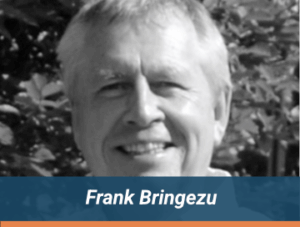
Frank Bringezu
Merck Healthcare KGaA
This webinar highlights the data standardisation and curation workflows behind the creation of the #VICT3R database, using the CDISC SEND format to populate single-animal data. These efforts have produced a unique source of curated control animal data – one that can be repurposed to generate Virtual Control Groups (VCGs) and ultimately reduce or replace the need for concurrent control animals in toxicity studies.
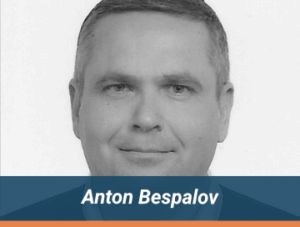
Anton Bespalov, MD, DmedSci
Managing Partner at PAASP Network
This webinar takes a critical look at the origins and consequences of low rigor in preclinical studies, and dives into practical barriers that prevent or slow down the adoption of essential practices like randomization and blinding. With experience spanning PAASP, EQIPD, and the ECNP Preclinical Data Forum, Anton brings valuable insights on what’s at stake and what needs to change.
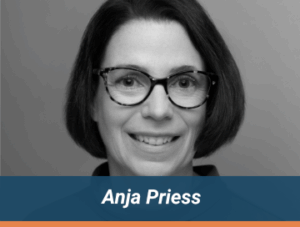
Anja Priess
Head of GLP Management, Bayer AG
This webinar explores the principles and importance of Good Laboratory Practice (GLP) within regulatory submissions and compliance. It provides an introduction to GLP, its historical development, and the evolution of standards ensuring laboratory data quality and integrity. The session also explores a specific scenario highlighting the collaboration between GLP test facilities and suppliers in maintaining GLP standards. Additionally, we cover the intersection of GLP and Computer System Validation (CSV), emphasizing the critical role of data integrity.
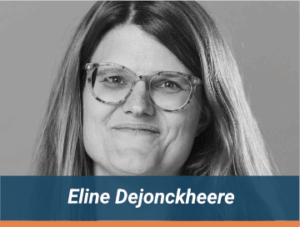
Eline Dejonckheere, PhD
DABT, Preclinical Safety Expert, Sanofi, Belgium
This webinar provides a general introduction to in vivo toxicology studies. The talk covers essential aspects of designing, conducting, and assessing standard systemic toxicology endpoints (in particular clinical and anatomical pathology), from regulatory requirements to data interpretation.
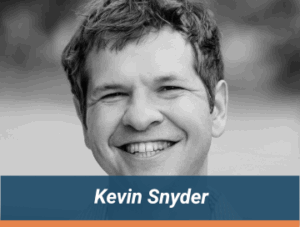
Kevin Snyder, PhD
Associate Director of Nonclinical Informatics, FDA/CDER/OND
PHUSE Nonclinical Topics Working Group Co-Lead
This webinar explores how SEND (Standard for Exchange of Nonclinical Data) is transforming toxicology. The session covers the role of SEND in streamlining collaboration across regulators, industry, and academia, enhancing transparency, and accelerating regulatory submissions with SEND-compliant datasets. Key topics include its impact on advanced analytics like machine learning and predictive modeling, support for 3Rs initiatives through SEND-based Virtual Control Groups (VCGs), and enabling open-source innovation with tools like sendigR.